Source Manual Vegetable Dicing Machine with Screen Mesh for Potato, Onion, Cucumber
Find a Manual Vegetable Dicing Machine with Screen Mesh among 30 available industrial units. Compare specifications such as 304 stainless steel construction, 0.75-1.1KW power options, and capacities up to 1000kg/H to select the right equipment for your processing needs.
Key considerations
Products List


Multifunctional Dicing and Slicing Fruit and Vegetable Cutting Machine
$1500.00 - $2200.00
MOQ: 1 Pieces

Dual-Function Dicing and Slicing Fruit and Vegetable Cutting Machine
$1500.00 - $2200.00
MOQ: 1 Pieces


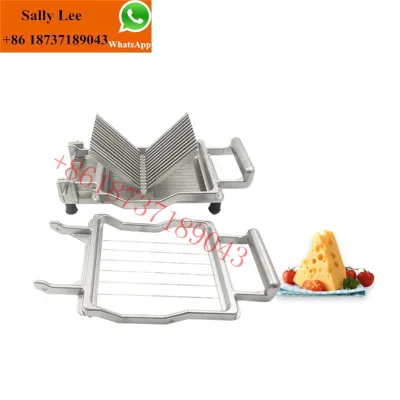


Multifunctional Vegetable Slicer
$50.00 - $55.00
MOQ: 10 Pieces
Hunan Dongfanghong Electromechanical Manufacturing Co., Ltd.

Multifunctional Vegetable Slicer
$50.00 - $55.00
MOQ: 10 Pieces
Hunan Dongfanghong Electromechanical Manufacturing Co., Ltd.


Automatic Fruit and vegetable cutter machine with English Manual for Easy Kitchen Use
$1500.00 - $1550.00
MOQ: 1 Sets
Comprehensive Sourcing Guide
Manual Vegetable Dicing Machine with Screen Mesh Sourcing Guide
Buyers seeking manual vegetable dicing machines with screen mesh must first distinguish between fully automated industrial units and semi-manual or manual feed systems. The provided market data reveals a prevalence of high-capacity electric models with power ratings ranging from 0.75KW to 1.1KW, which suggests that true manual operation may be limited to specific feed mechanisms rather than the entire cutting process. Procurement teams should verify if the "manual" designation refers to the loading method while the cutting action remains motorized, as most listed units like the HT-CHD100 and HT-QP500 are electrically driven.
When evaluating screen mesh configurations, buyers must align their specific dicing size requirements with the machine's adjustable capabilities. The observed product specifications indicate standard dicing sizes of 8mm, 10mm, 12mm, 15mm, and 20mm, which are typically achieved through interchangeable mesh screens or blade assemblies. It is critical to confirm whether the screen mesh is a fixed component or a customizable part of the system, as the data shows some models offer customized specifications while others rely on standard industrial dimensions.
Product Scope and Observed Listing Signals
The current market listing signals indicate a strong focus on stainless steel construction, with materials ranging from standard SUS304 to high-grade 316L for enhanced corrosion resistance. This material choice is essential for food processing environments where hygiene and durability are paramount, particularly for machines handling acidic fruits or salty vegetables. Buyers should prioritize units explicitly stating SUS304 or 316L construction to ensure compliance with food safety standards, as generic "stainless steel" claims may not guarantee the necessary grade for long-term operational integrity.
Capacity observations vary significantly across the catalog, with output rates ranging from 300kg/H to 1000kg/H depending on the specific model and configuration. This variance suggests that the "manual" aspect of the machine might influence throughput, or that different models are designed for distinct production scales. Procurement decisions should be guided by the specific volume requirements of the facility, ensuring the selected unit, such as those with 600-1000kg/H capacity, matches the daily processing needs without creating bottlenecks.
Technical Specifications to Verify
Buyers must rigorously verify the voltage and power requirements to ensure compatibility with existing facility infrastructure. The observed data lists voltages of 380V and power ratings of both 0.75KW and 1.1KW, indicating that these machines are designed for industrial three-phase power supplies rather than standard single-phase outlets. Confirming the electrical specifications is a critical step before ordering, as mismatched voltage requirements can lead to equipment failure or the need for costly electrical upgrades at the installation site.
Dimensional analysis is equally important, as the physical footprint of the machine must fit within the allocated production floor space. The listed standard dimensions include sizes such as 7106601085mm and 8506501050mm, with some models offering customized standard sizes to meet specific layout constraints. Buyers should measure their available space carefully and cross-reference these dimensions with the supplier's technical drawings, ensuring that the machine's weight, which ranges from 60kg to 110kg, can be supported by the floor structure.
Compliance and Safety Documentation
While specific certification data is limited in the provided context, buyers should explicitly request documentation regarding CE compliance and other relevant safety standards. The background information mentions ISO 2390 and CE as potential standards, but these should not be assumed without verification from the supplier. Procurement teams must demand a valid certificate of conformity that confirms the machine meets the safety regulations of the destination country, particularly regarding electrical safety and mechanical guarding for operators.
Food safety compliance is another critical area where documentation cannot be overlooked. Since the machines are designed for cutting vegetables, fruits, and potatoes, the materials used must be food-grade, and the design should prevent contamination. Buyers should verify that the stainless steel components are certified for food contact and that the machine design allows for easy cleaning and sanitation, ensuring that the equipment meets local health department regulations for commercial food processing facilities.
Cost Drivers and Commercial Terms
The price range observed in the market spans from 1.82 USD to 14,000 USD, reflecting a vast difference between basic components and fully integrated industrial systems. This wide variance suggests that cost drivers include the complexity of the cutting mechanism, the quality of the stainless steel, and the level of automation or customization offered. Buyers should be wary of extremely low prices that may indicate inferior materials or incomplete specifications, while also understanding that high-end models with advanced control systems will command a premium.
Minimum Order Quantity (MOQ) and packaging requirements are significant factors in the commercial terms of these transactions. The observed MOQ ranges from 1 to 500 units, offering flexibility for small businesses while accommodating large-scale distributors. Additionally, the packaging is typically specified as fumigation-free wooden cases or plastic wraps, which impacts shipping costs and import duties. Buyers must clarify these terms early in the negotiation to avoid unexpected logistics expenses and ensure the equipment arrives in pristine condition.
Supplier Qualification and Quality Control
Supplier qualification should focus on verifying the origin and manufacturing capabilities of the vendor, as the data points to origins in Henan and Zhucheng City, Shandong Province. These regions are known for food machinery manufacturing, but buyers must confirm the specific factory's track record and production capacity. Requesting references from previous clients and conducting a virtual or on-site audit can help validate the supplier's ability to deliver consistent quality and meet delivery schedules.
Quality control processes must be clearly defined before finalizing the purchase agreement. Buyers should inquire about the supplier's internal testing procedures, including stress tests for the cutting blades and durability checks for the motor and frame. The presence of an automatic control system in some models suggests a need for rigorous software and hardware validation. Establishing a clear quality assurance protocol ensures that the delivered machine performs as expected and minimizes the risk of post-purchase failures.
Long-Term Procurement Checks
Long-term procurement success depends on the availability of spare parts and the supplier's commitment to after-sales support. Given the mechanical nature of vegetable dicing machines, components like blades and screens will eventually wear out and require replacement. Buyers should verify the supplier's inventory of spare parts and the lead time for shipping replacements, ensuring that downtime is minimized during the machine's operational life.
Maintenance and serviceability are also critical for long-term efficiency. The observed advantages of high efficiency and long service life are contingent on proper maintenance, which requires clear documentation and training. Buyers should request detailed operation manuals and maintenance schedules from the supplier to ensure their staff can keep the machine running optimally. Establishing a long-term service agreement can further secure the investment and provide peace of mind regarding the machine's performance over time.
FAQs
How does a Manual Vegetable Dicing Machine with Screen Mesh produce different dice sizes?
Dice size is controlled by swapping the screen mesh or cutting grid, so you change the mesh plate to change output dimensions. Listed dicing sizes on comparable machines include 8mm, 10mm, 12mm, 15mm, and 20mm. Choose the mesh based on your recipe requirements, and confirm with the supplier which mesh sizes are included and whether extra plates can be ordered separately.
What capacity can I expect from a vegetable dicing machine in this product range?
Capacities in this product range vary by model, from around 300-1000kg/h up to 600-1000kg/h depending on the machine and material fed. Harder vegetables or smaller dice sizes usually reduce throughput. When comparing options, state your required hourly output and product types so suppliers can recommend the model whose rated capacity matches your production schedule.
Which materials are used for the food-contact parts of these cutting machines?
Food-contact parts are typically made of SUS304 stainless steel, and some listings offer 304 or 316L stainless steel for enhanced corrosion resistance. 316L is often preferred for acidic fruits and wet processing environments. Confirm the exact material grade for blades, mesh screens, and hoppers before ordering, and request material documentation from the supplier for your food safety records.
Can these machines cut both vegetables and fruits such as apples or strawberries?
Yes, comparable machines are listed for vegetable cutting, fruit cutting, and potato cutting, with applicable products including apple cutting, peach cutting, strawberry cutting, eggplant, cucumber, and onion. Firm produce dices most cleanly, while soft or fibrous items may need slower feeding or different blades. Ask the supplier to test your specific product to confirm shape quality and yield before purchase.
What voltage and power options are available for these vegetable cutting machines?
Listed machines use electricity with power ratings such as 0.75KW and 1.1KW, and a 380V voltage rating appears in the specifications. Before ordering, confirm your facility's supply matches the machine, since 380V three-phase power is not standard everywhere. Some suppliers may offer voltage customization, so state your local power standard when requesting a quotation or factory confirmation.
How are these machines packed and how heavy are they for shipping?
Machine weights in this range run from about 60kg to 110kg, which keeps freight manageable for single units. Packing is typically a fumigation-free wooden case, or a wooden case with plastic wrap for customized models. Confirm the gross packed weight and case dimensions, listed for some models around 710*660*1085mm, so you can calculate freight accurately.
Can I order a customized vegetable dicing machine for specific production needs?
Yes, customization is available, and some listings are explicitly built to customized models and dimensions. Typical customization points include machine size, output capacity, dicing mesh options, and material choices such as 304 or 316L stainless steel. Provide your product list, target capacity, and installation constraints early, since customized units usually need longer production time than standard catalog models.
What should I check before choosing between dicing machine models?
Compare dicing size options, hourly capacity, material grade, power and voltage, machine dimensions, and packing method against your production plan. A model like the HT-CHD100 lists 600-1000kg/h capacity, 8mm to 20mm dice sizes, and a 380V 0.75KW or 1.1KW configuration depending on the listing. Match these specifications to your products, factory power supply, and available floor space before requesting quotes.